
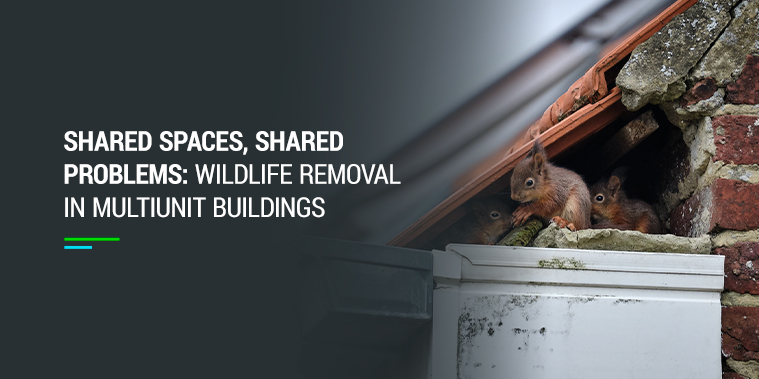
When wildlife invades a condo, townhome or apartment building, the problem rarely stays in just one unit. Property owners and renters often discover that sealing one apartment doesn’t solve the issue. Animals like squirrels, raccoons, mice and bats move freely through shared attic spaces, wall voids and service penetrations that connect all units in multiunit buildings.
Wildlife removal in multiunit buildings requires building-wide solutions and proper coordination. Explore why treating only one unit often fails and how comprehensive solutions can eliminate problems in the long term.
Why Multiunit Buildings Are Vulnerable to Wildlife
Multiunit buildings share structural features that make them especially susceptible to wildlife infestations. Understanding key vulnerabilities helps property owners and managers address problems effectively:
- Shared attic spaces: Multiunit buildings often share continuous attic spaces that run the length of multiple units. Once inside a shared attic, wildlife can access any unit without re-entering from outside.
- Firewall gaps: Firewalls are designed solely to slow fire spread, not block wildlife. Wildlife can use these gaps to travel between units.
- Service areas: Holes for electrical, plumbing and HVAC systems run between units, providing direct pathways for wildlife throughout the building. Animals, like mice, bats and rats, can squeeze through surprisingly small openings.
- Gaps between floors: These spaces often run the length of multiple units, providing hidden pathways that animals can exploit to move throughout the structure.
Common Wildlife Found in Shared Structures
Multiunit buildings frequently encounter these wildlife intrusions, each presenting unique challenges:
- Squirrels: These rodents seek warm, protected spaces for nesting and often access attics through roof vents and soffit gaps. They can cause significant insulation damage and leave contaminated droppings throughout shared attic spaces.
- Raccoons: Similar to squirrels, raccoons look for sheltered areas to nest, often gaining entry by tearing through damaged roofing. They contribute to insulation damage and widespread contamination throughout attics.
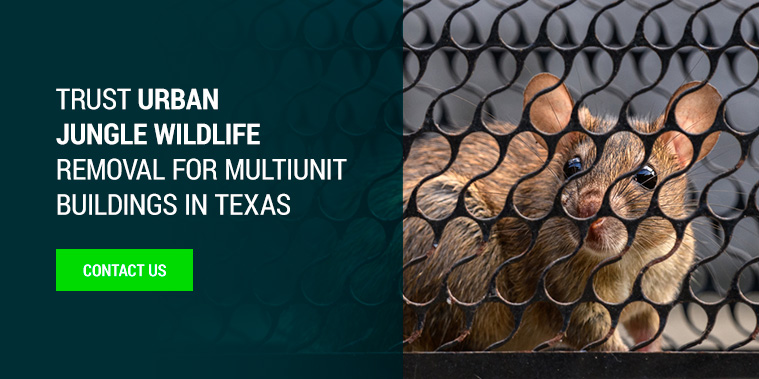
- Mice and rats: Common species like roof rats and house mice travel extensively through wall voids and gaps between units. These rodents reproduce rapidly within weeks and can quickly expand populations throughout connected buildings, creating new entry points as they go. They also constantly gnaw due to ever-growing incisors, which often contributes to greater damage.
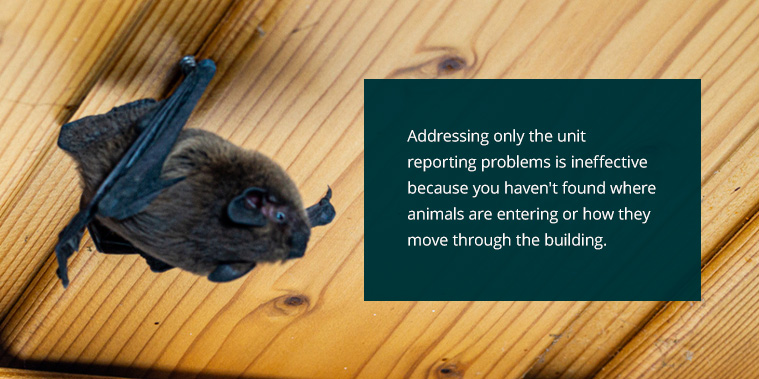
- Bats: Mexican Free-Tailed bats are a frequent presence in Texas, often roosting in shared attic spaces. The accumulation of bat guano can cause structural damage, such as sagging ceilings. Bats can also carry diseases like rabies and histoplasmosis, posing potential health risks to all connected units.
- Birds: Species like European Starlings, House Sparrows and pigeons commonly nest in exhaust vents and soffits. Their nesting in dryer vents creates fire hazards and blocks ventilation. It’s important to note that some bird species are federally protected, requiring specific authorization for removal.
Why Treating Only One Unit Doesn’t Work
The fundamental challenge of wildlife removal in multiunit buildings is that animals typically enter through one unit but travel freely through connected spaces. Addressing only the unit reporting problems is ineffective because you haven’t found where animals are entering or how they move through the building.
Sealing only one unit in a duplex, townhome or condo forces animals into neighboring units rather than eliminating them. You need an organized plan to effectively address pest problems in multifamily properties. The unit with visible wildlife activity may not be where animals originally entered. Animals follow scent trails and structural pathways from their entry point.
For example, a raccoon might enter through a damaged soffit on one end of the building but make noise in an attic space three units away, which is why building-wide coordination is essential.
Who Can Authorize Wildlife Removal in Multiunit Buildings
Understanding authorization requirements prevents delays and ensures wildlife removal proceeds legally and effectively.
Written permission from the property owners or management is required, regardless of who pays for the wildlife removal services. This authorization is necessary even when renters cover the cost. According to Virginia Department of Wildlife Resources guidelines, proper authorization protocols protect service providers and property owners from liability issues.
What Renters Need to Know About Wildlife Removal Authorization
Renters cannot authorize wildlife removal services without the landlord’s or property owner’s approval. If you’re experiencing wildlife problems in your rental unit, follow these steps:
- Contact your property manager or landlord immediately
- Document the problem with details about sounds, droppings or damage
- Provide photos or recordings, if possible, to support your request
- Be patient — authorization processes take time, but are legally necessary
Understanding this requirement up-front prevents delays and wasted consultation fees.
Coordinating Between Multiple Owners in Condos and HOAs
Condos and townhomes with separate owners require coordination between all affected parties. HOA boards may need to approve building-wide treatment plans before work can begin. Inspections should be scheduled when all residents are available, and cost-sharing arrangements should be discussed up front among property owners.
The Comprehensive Process of Building-Wide Wildlife Removal Services
Effective wildlife removal in multiunit buildings is a specialized service that goes far beyond simply addressing the visible signs of an infestation in a single unit. Due to the interconnected nature of these structures, a truly successful solution requires a comprehensive, building-wide approach.
This multifaceted strategy typically involves three critical components:
1. Coordinating Access Across Multiple Units
Gaining entry to every connected unit is paramount for a complete assessment and treatment. Property managers or owners are crucial in facilitating this access, ensuring residents are informed and available. Clear communication is essential, as the success of the entire operation hinges on the ability to inspect and treat all potential points of entry and harborage sites, preventing untreated areas from becoming immediate reinfestation sites.
2. Comprehensive Inspection of All Connected Spaces
Following access coordination, trained wildlife specialists conduct a comprehensive inspection of all connected spaces. It involves meticulously examining the unit reporting the issue and every shared space within the building. This includes attics, crawl spaces, wall voids, utility chases, basements and the entire exterior perimeter.
The goal is to identify all primary entry points, secondary access points, animal travel patterns, nesting sites and the overall extent of the infestation. This detailed mapping is crucial for understanding the wildlife’s movements and planning an effective removal strategy, ensuring no hidden pathways are overlooked.
3. Staged Exclusion to Prevent Trapping Animals Inside
Sealing all entry points simultaneously can trap animals within walls or attics, often leading to additional damage and issues. Staged exclusion helps prevent animals from being trapped during removal services. This carefully planned sealing process is vital to avoid severe negative consequences. The staged approach involves initially sealing most identified entry points while leaving one or two active exits.
One-way doors or traps are then installed at these remaining points, allowing animals to leave but preventing their reentry. Once technicians confirm all wildlife has exited, these final points are securely sealed, ensuring the building is completely animal-proofed without causing unnecessary harm or creating new problems.
This meticulous, coordinated strategy is the only way to achieve lasting wildlife removal in complex multiunit environments.
Trust Urban Jungle Wildlife Removal for Multiunit Buildings in Texas
Wildlife problems in condos, townhomes, apartments and duplexes require a different approach than single-family homes. Urban Jungle Wildlife Removal’s team of trained wildlife biologists understands the unique challenges of shared structures and connected living spaces. We don’t offer one-size-fits-all solutions because every property has unique needs. We set traps and check them every one to three days until all wildlife trapping and removal is complete.
If you’re a property owner, manager or HOA board member dealing with wildlife in your multiunit building, contact Urban Jungle Wildlife Removal today to schedule your building inspection. If you’re experiencing wildlife problems in your rental unit, please contact your property owner or manager first, and let them know we can help.